

Summer Through the Lives of Four Youth Storytellers
Spark:
What are 45% of us actually doing this summer?
Conflicting research about whether summer break is bad or good for us suggests that it isn’t the break itself that affects us, but what we choose to do with that break.
So… what are we doing over summer? What is the unfiltered truth?
Let’s hear from the experts…
Meet our storytellers!
Meet R.J.
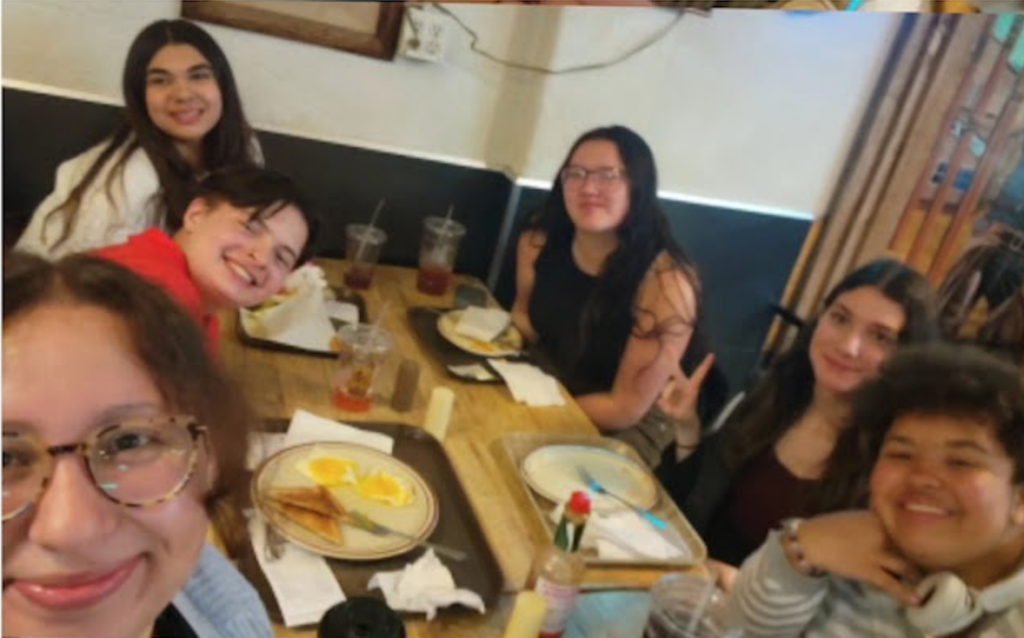
(R.J. is in Red)
Hey! My name is RJ, I grew up in a single parent household, thirty minutes from Denver, fitting into that suburban style. Growing up in a close and tight-knit family, also growing up in Colorado and now spending half the year in New Mexico has shaped the rhythm of my life, but I’ve always been someone who gravitates toward quiet spaces and small circles. As a child, I was deeply introverted and rarely sought out social interaction, except with the few people I trusted. My younger brother was the person who consistently brought me out of my shell, he invited me to play outside, join him in games, and experience moments that became some of my favorite memories.
As I balance studying Psychology, Sociology, and Human Services with work and volunteering, I still find it hard to make time for friends or even to get outside and decompress. But when I do, I’m reminded how much joy there is in simple moments. My summers were never filled with big trips or constant excitement like some of my friends experienced. Instead, they were slow, calm, and centered around family and a few close friends. Walking to the park, grabbing a slushie at the nearest gas station, or just spending time at home became memories I wouldn’t trade. These experiences taught me that meaningful connection doesn’t require glamour or constant activity, it grows in small, intentional moments with the people who matter.
Meghan’s thoughts:
Connection can be simple. One strategy for coping with loneliness is just spending time with friends. The quality of those friendships matter. Teen research participants noted the importance of being intentional in choosing friends that have shared interests, are reliable, willing to compromise, authentic, engaged in the relationship, and vulnerable. Teens also highlighted that a good proportion of our interactions should be positive, “mood-lifting, and increase happy emotions ”(Burke at al, 20204., pg 7) Friends aren’t the only source of connection. Summer can be a time for us to connect more with family, which is associated with better well-being (Chen et al., 2019). Time in nature boosts our self-satisfaction, connection (to self and others), and overall well-being (Akpinar, 2021)
Meet Dawin
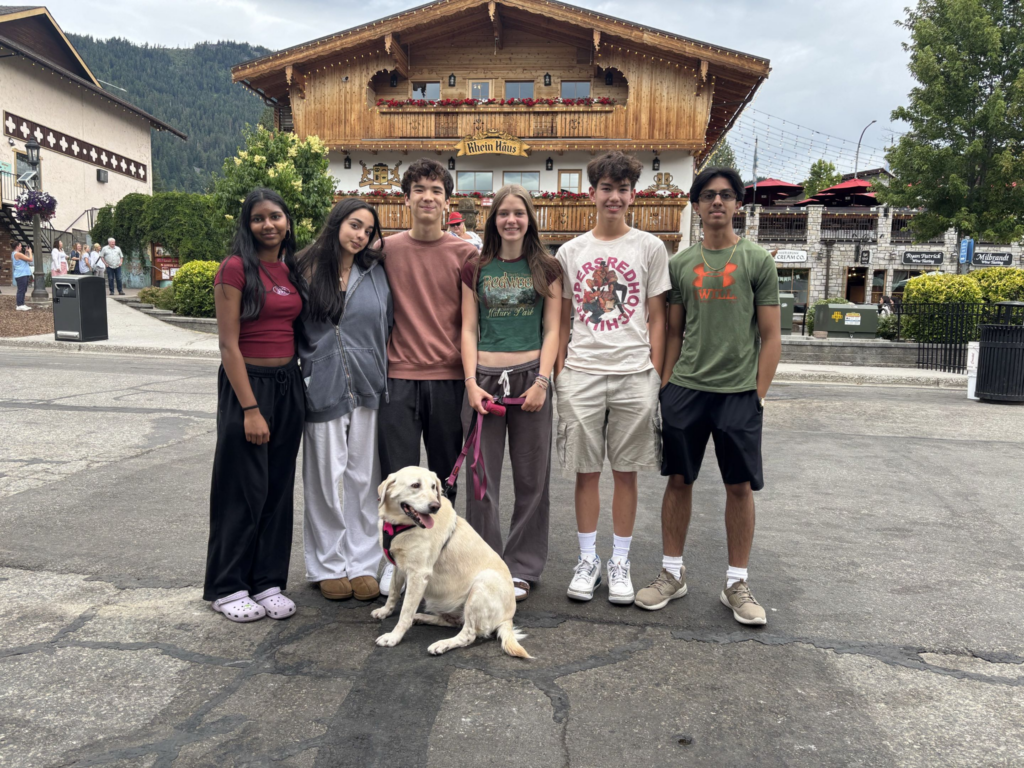
(Dawin is third from the left)
My name is Dawin Elliston, and I’m currently a high school sophomore at Edmonds-Woodway High School in Washington! I grew up in a suburban town with an older brother and two parents. My greatest passions are the cello, running, and listening to music by Laufey.
The word “summer vacation” has put a lot of pressure on me to fit in with the people around me. During the school year, I’ve felt the need to conform to the social pressure surrounding the activities I’m part of, the clothes I wear, and the words I say. Having this constant social stress creeping in your brain for ten months has made me feel confused when it’s over. When the bell rings on the last day of school, I suddenly have more time by myself, without the peer pressure of those around me. However, being used to this feeling of “fitting in” means that when summer vacation begins, I’m constantly trying to find out how to have the “best” vacation, and ensure that what I’ll do over the summer is just as “good” as what all my other friends do over the summer. I was regularly checking social media to hope that my summer plans were just as riveting as theirs.
I recognized that instead of the stress and anxiety I was feeling over the summer, what I really needed was a summer break. The two-month gap between the end of the school year and the start of a new one gives me the opportunity to not feel pressured by the interior of the school walls, and allows me to unwind. Rather than feeling stressed about practicing a new cello piece for an upcoming competition, I could use the summer to relax by busking with a few songs that I enjoy. Instead of having hard workouts every week for cross-country, I could enjoy a few easy runs with the sky clear and the sun shining. I’ve found personally that summer gives me a break from the social pressures, the academic stress, and the activity push.
Summer vacation doesn’t have to be another social game, but is the opportunity to really enjoy the hobbies I love, and even learn a little more about myself.
Meghan’s thoughts:
Fear of Missing Out (FOMO) can be big during the summer, but the more we feel actively engaged in a meaningful life and feel like we have a purpose, the less FOMO we have, and the better our well-being. (Zawadzka et al., 2019)
Ironically, trying to fit in at school often worsens loneliness rather than easing it (Burke et al., 2024). And being alone isn’t the same as feeling lonely. Alone time can actually boost our well-being. Summer offers a break from school pressures, which makes us happier and less stressed (Burke et al., 2024; Smillie, 2026). One research participant remarked: “I feel more happy in the summer holidays since I don’t need to deal with homework and all the other stuff.”. And another noted: “ I think it [school] affects young people’s wellbeing because people can get very stressed, and they don’t get used to it, so they will harm, kind of slightly, harm like your brain, because you’re holding in too much things at one time” (pg. 113, Smillie, 2026)
Meet Johannes

(Johannes is on the left)
My name is Johannes, and I’m a sophomore in high school, a basketball and lacrosse player, and someone who can’t go a day without music! But, for a long time, I was also someone who spent his summers alone – and not entirely by choice.
Growing up, I was always on the quieter side. Then the pandemic hit right before my transition into middle school, and what might have been a minor personality trait became a real obstacle. I had close friends, but I never felt like I truly belonged to a group. And in summer, even those friendships seemed to evaporate. People went on trips. They had their own circles. I was left with my bedroom, my screen, and too much time to think.
The first week or two always felt fine. Gaming, sleeping in, decompressing. But as summer wore on, something would quietly shift. The solitude I’d welcomed started to feel less like peace and more like being forgotten. And the problem went beyond just shyness; I lived forty minutes from my school, which meant forty minutes from almost everyone I knew, in a quiet part of town where there wasn’t much to do.
High school changed things, partially. I’d started rebuilding the social skills that Covid had worn down, and now I was only a few minutes from campus – from my friends. Connection felt possible again, but a new obstacle appeared for my friends and I: we had no money and couldn’t drive. On top of that, our parents had their own lives, and asking for a ride felt like a favor we were always cashing in.
So, we got creative. Light rail ride to a cafe, a park with no plan and no agenda, a gym where we could play basketball until our legs gave out. My friends and I pieced together a summer out of public transit, free spaces, and the simple fact that we wanted to be around each other. It wasn’t glamorous – but those moments gave my summer something it had been missing for years: color and connection.
Meghan’s thoughts:
Teens emphasized that loneliness can be a hard part of school breaks: “Um I think, I think loneliness is a pretty bad thing, like if you don’t get the chance to meet up with your friends for a while it does, you’re not used to it, it feels kind of sad.” But, participants also noted that they did not personally experience this, further suggesting that how we choose to spend our summer break time makes a difference (Smillie 2026).
Even though boredom can have negative outcomes (i.e., Matijašević, et al, 2025; Spruyt et al., 2018), it is not inherently good or bad, giving us important information that we are not engaging in our lives in a meaningful way (Bench & Lench, 2013; Danckert et al., 2018; Lin & Westage, 2021). Boredom may lead to us being more creative, especially when we have a strong sense that our choices can influence outcomes (Park et al., 2019; Saravanan et al., 2026). Emphasizing the importance of agency and taking charge of our summer.
Meet Kassian
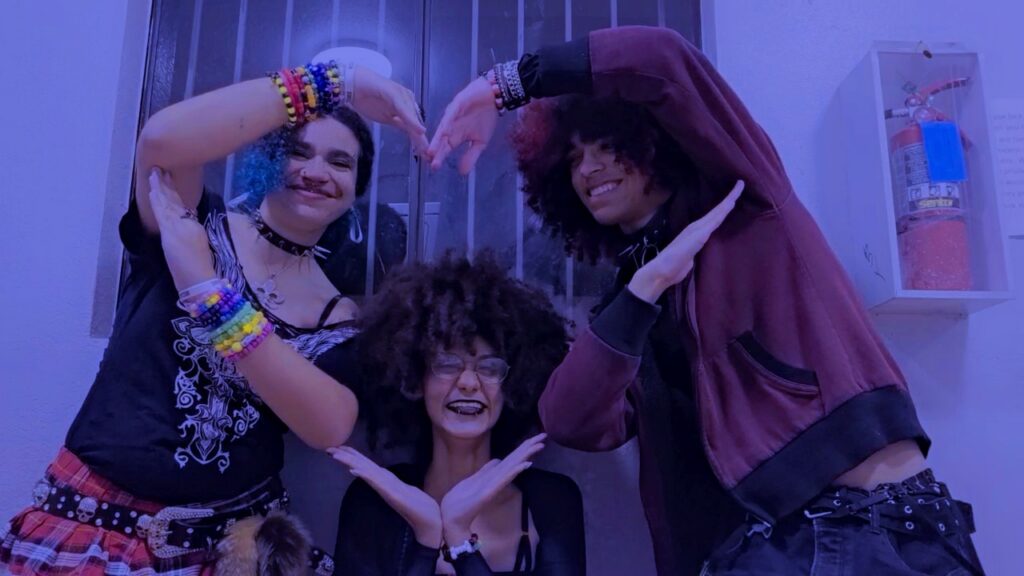
(Kassian is on the far left)
My name is Kassian Hosten, and I am a student at Pima Community College. With college, work, and other things going on in my life, I can get pretty busy. This makes it hard to make time to socialize and go outside, especially when my friends are also busy. Another struggle is my financial situation, as I often can’t afford to go out with others or by myself because of the costs of transportation, food, and the things I want to buy. It can be hard for me to find low or no-cost activities.
Sometimes the best, cheapest, easiest, or only way to stay connected with others is online, and I’ve come to recognize over the past 6 years that virtual connections are just as meaningful as in-person connections. Most of my communication is online now that I’m out of school with most of my friends, and sometimes the only way I can have close, meaningful connections with friends is by calling or texting each other, playing video games together, sharing memes and videos, and more.
Since the end of high school, I’ve learned to appreciate low-effort hangouts even more, especially because I experience executive dysfunction and Major Depressive Disorder (MDD), which makes doing anything difficult, including making time for myself and for my friends and loved ones, because sometimes I just don’t have the physical or mental capacity. I end up feeling bad for not doing enough and feel like I’m missing out on everything. I’ve realized I have to work with myself instead of being critical and making myself feel worse. I have, over time, learned my own ways of navigating my struggles and needs and showing up in the ways I can.
I’ve been able to find accessible connection through things like running errands, doing homework or studying, doing an activity with stuff we own, doing something fun and nostalgic we used to do as kids, or parallel play or body doubling. I try not to push myself to do something when I’m not in a good place. If I can’t fully show up and be present, it’s better to wait until I can really enjoy the time spent than to feel bad trying to meet an arbitrary quota. I remind myself that it is ok to take breaks from social connections when I feel it gets too much, and that I’m not a bad person for taking time away from people, for myself. Pressure isn’t always good, and by relieving some of the stress around staying engaged, active, and connected, I’ve made space for more enjoyment and comfort.
I am honest with my friends about my feelings, circumstances, and why I cancel or decline plans, so that I don’t feel the need to avoid talking to them out of guilt or shame. I have also learned it can be easier to socialize with just a few people at a time. My friends and I won’t always invite every friend to hang out with us every time we do something. It’s okay to see certain friends more often or reserve certain hangouts for certain people, and that doesn’t take away from the friendship. This is helpful to remember when I feel left out, which I try to recognize, and remind myself that those feelings are valid, but aren’t always warranted. Additionally, because of my experiences with feeling lonely and isolated in a group of friends and experiencing burnout, I’ve learned to value the quality of hangouts over the frequency and amount of hangouts. Figuring out what fun and friendship mean to me, and how best to live up to those ideas, has made me feel more connected to myself and my loved ones.
Meghan’s thoughts:
Research supports the idea that summer break is associated with decreased mental health difficulties like anxiety and depression, as well as suicide for youth (CDC, 2023; Chandler et al., 2022; Stromájer et al., 2023).
People with neurodivergence can get easily overstimulated and burned-out, making it harder to regulate our emotions. It can help to minimize triggers and take breaks in a safe space, which can mean limiting socialization. At the same time it is also important for us to have meaningful and supportive relationships, especially in small groups or one-on-one (Stavraki, 2024).
While the research is not clear about how social media use and connecting on digital platforms impacts our well-being and mental health, some studies have shown that we feel closer to our friends when we use technology to connect, especially when we use it to direct message, converse, chat, or talk directly (Al Jbouri et al., 2024). Digital communication can support self-expression ,and active engagement, like gaming, can benefit teens with disabilities (Prochnow et al., 2025, Smart et al., 2023).
Some studies have shown that the more time we spend on social media, especially FB, the more lonely we are (Gregory et al., 2023). This may be due to peer comparison and support that is insufficient. It’s associated with heightened anxiety, depression, and concerns about body image (Prochnow et al., 2025; Sava et al., 2025).
Teens shared that virtual contact can help combat loneliness, and being intentional about social media use and in-person contact matter too, “Um I think calling is fine to like an extent, like if you haven’t met up with any friends in like a week or two like you can call them instead but it doesn’t feel quite the same as meeting and seeing them in person. I think if you were to spend like the entire holiday not seeing anyone that would, that would make me really upset” (Smillie, 2026, pg 124-125).
Meet Meghan
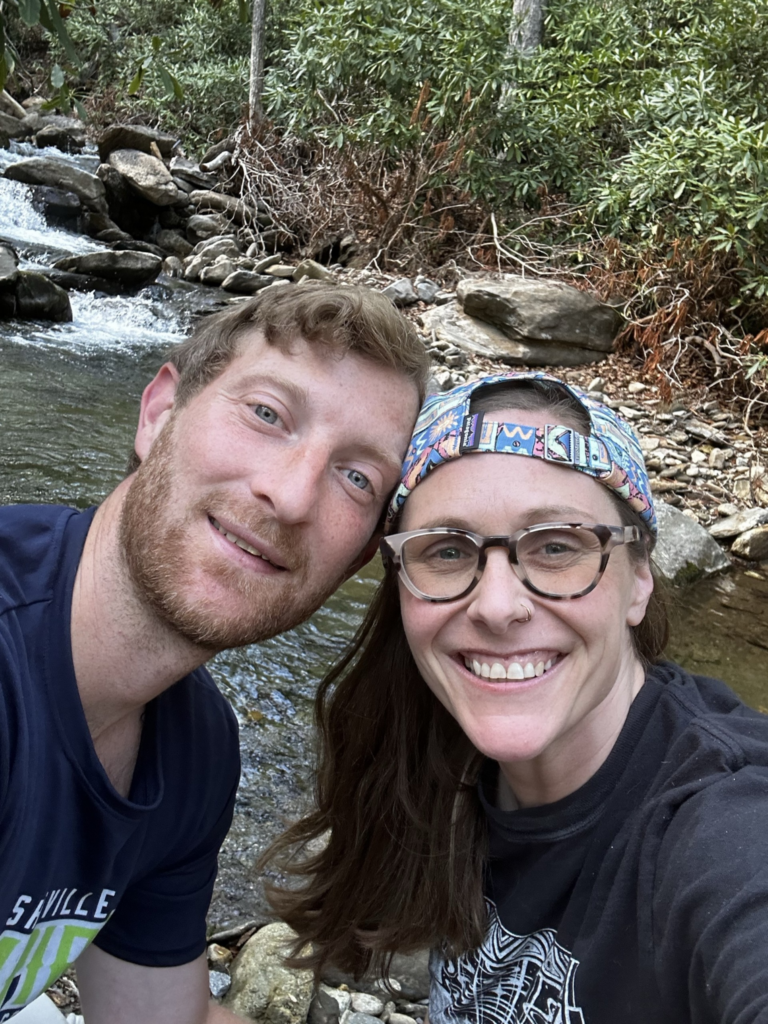
(Meghan is on the right)
I am Dr. Meghan Goyer. I care deeply about helping ALL people be the best, most authentic, and healthiest versions of themselves, especially adolescents. This passion intersects with my love of science, which makes being a Psychologist a great fit for me. Throughout this article I have shared the ways that science and research have supported the messages of our storytellers and have provided additional understanding. I believe science is an important tool in helping us understand why we are the way we are, and how to live life to our full potential. As much as I love science, I also love being outdoors, connecting with friends and family, live music, and my dogs. I live in Asheville, NC where I am grateful to have access to all three.
Meghan’s final thoughts:
Out of a million k-12 students, 55% of us were involved in an organized summer program. That means 45% of us weren’t (Gallup, 2024). Free time during summer break can benefit us by offering us a chance to practice being more intentional, which improves our ability to achieve goals and live in line with our values (Afterschool Alliance, n.d.; Eglitis et al., 2024; Smillie, 2026).
TLDR;
Summer itself isn’t good or bad. What matters is how we use our time. Connection matters most and it can be simple! FOMO and comparison is too common and steals our glimmers.
Alone does not equal loneliness and boredom is not always bad. Summer offers us time to reflect and connect inward, which prepares us to connect with others. Barriers to connection are real, so it will take some planning and effort, but the mental and social health benefits to connection and the stress reduction over the summer are worth it!
Call to Action For Youth:
Keep it Simple
- Hang out in free spaces (parks, libraries, free museum days, community events)
- Use public transportation to get together or explore together
- Host low-cost hangouts (movie night, potluck, games, baking/cooking)
- Check out something new (open mic events, thrift stores)
- Try simple shared activities (errands, walks, picnics, study sessions)
Be Creative
- Arts & crafts (make a card for someone)
- Make some music together or make a new playlist
- Write a story together or create a photo mood board
- Try new hobbies (crochet, gardening, new language, cooking, making videos)
- Play games (board games, card games, 4-square, video games)sessions)
Get Active & Go Outside
- Explore your area like a tourist or attend free events
- Walk, bike, hike, swim, or play sports
- Spend time in nature or green spaces
- Try something new (roller skating, yoga, workouts, color walks)
- Stay sun safe (drink water, take breaks, wear sunscreen)
Grow & Be Intentional
- Set goals or make a summer bucket list
- Volunteer, get a job, or learn new skills
- Choose activities that align with your values and interests
Support Whole Person Well-Being
- Balance social time, rest, and routine
- Be mindful with social media (connect more, scroll less, take breaks, check in on yourself)
- Practice gratitude daily
- Reconnect with yourself too, not just others
- Allow downtime and even boredom
Core idea: Connection doesn’t have to be expensive or complicated—be intentional, stay active, try new things, and enjoy simple moments with others.
Call to Action For Caregivers:
Connect & Communicate
- Balance social time, rest, and routine
- Be mindful with social media (connect more, scroll less, take breaks, check in on yourself)
- Practice gratitude daily
- Reconnect with yourself too, not just others
- Allow downtime and even boredom
Connect & Communicate
- Spend low pressure time together (Take walks, get out of the house, errands, hanging out)
- Be up front, “I am super busy today and I would love to hang out. I am able to do this level of connection, would you be open to doing that with me today?”
- Be phone-free and present
- Recognize that some resistance might mean they want more positive attention.
- Tell stories to inspire curiosity and ideas.
- Give teens ~30 min decompression time after big social events before debriefing
Support Independence and Growth
- Allow boredom. It can spark creativity and reflection.
- Gently encourage reaching out to others.
- Foster independence by offering resources but letting them make their own choices.
Watch for Warning Signs
- Withdrawal, irritability, persistent low mood/crying, unexplained aches, uncontrollable worry, or thoughts of self-harm can all signal your teen might need more support (therapy, resources)
Know that you are never alone, even if it feels like it. If you find yourself needing extra support, talk to your caregivers about how you feel. If it feels urgent or you are having thoughts of hurting yourself or others, call 988 or anonymously text 741-741. If you are in WA and need someone to talk to, you can call 888.537.1634 or go to hearmewa.org
This article was authored by Dr. Meghan Goyer in collaboration with Only7Seconds. Dr. Meghan Goyer currently serves as a member on the Only7Seconds’ Scientific Advisory Board.

DR. MEGHAN GOYER
After working with youth in various mentoring and leadership roles since she herself was a teen, Meghan completed her PhD in Clinical and Community Psychology from Georgia State University where she was a part of the Resilient Youth Next Generation Program. She is passionate about increasing awareness of social connection as a health priority and working collaboratively to increase social connection for ALL people, especially youth and young adults – the loneliest age groups. Meghan’s research and community work has reflected this through supporting advances in social connection construct clarity and measurement, along with disseminating best practices at a population level – an effort she collaborated with the CDC on. Meghan also has experience in program evaluation and content development with youth organizations (I.e. The Boys and Girls Club, Georgia Statewide Afterschool Network). She currently works as a psychologist providing therapy and assessment for adolescents and young adults, alongside consultation in program development/evaluation, and ongoing engagement in the advancement of social connection as a public health priority. Meghan has published multiple academic papers and has presented at numerous conferences. She has received several awards for her work and been featured in media pieces highlighting her story and efforts. Meghan joined the O7S Scientific Advisory Board in February of 2026.
GET CONNECTED: LinkedIn
REFERENCES:
Afterschool Alliance. (n.d.). Washington afterschool facts. Retrieved May 25, 2026
Bench, S. W., & Lench, H. C. (2013). On the function of boredom. Behavioral Sciences, 3(3), 59–472.
Dadvand, P., Kelishadi, R., Shayanfar, M., Jafari-Adli, S., Ejtahed, H.-S., Motlagh, M. E., Ardalan, G., & Heshmat, R. (2019). Use of green spaces, self-satisfaction and social contacts in adolescents: A population-based CASPIAN-V study. Environmental Research, 168, 212–217. doi.org
View comments
+ Leave a comment